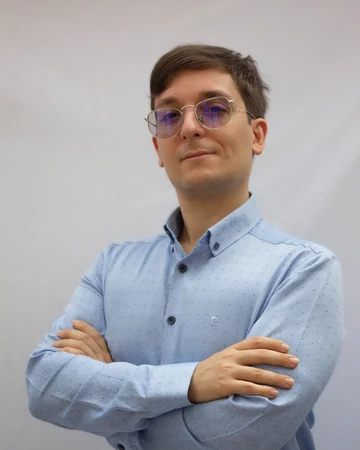
Marcello Maugeri
Technical Co-Founder
AI & Cybersecurity researcher with a PhD in Computer Science. Previously founding member of a UK startup.
AI that expands the creativity of musicians, inside the tools that songwriters, producers, and mixing and mastering engineers already use.
We research AI for music and bring it to every step of a song, from the first idea, through production, to the final mix, with musicians as the authors of their music.
We work to bring AI closer to understanding music and creating it: models that follow melody, harmony, rhythm, lyrics and arrangement, and that propose new material that fits what is already there. This research reaches people in two directions.
Producing music of high quality usually takes years of practice with complex tools. We want people from every background to learn to produce at that level, by working on their own songs and hearing what each change does. Access also means accessibility for people with disabilities: AI that acts on the musician's own words opens the same tools to people who work in other ways. Ode belongs mainly to this direction.
We teach machines to reason about the music they produce: why a melody suits its chords, how a section builds towards the chorus, what rhythm a lyric asks for. Originality is part of the same research, so that what the AI contributes respects the work of other artists. Songwriters, producers, and mixing and mastering engineers remain the authors of their music.
OdeMuse researches AI for music: models that understand music and models that create it. Each area below reaches musicians through Ode.
Music asks for models that know a particular song in detail. We work on models that follow melody, harmony, rhythm, lyrics and arrangement across a whole project, and that read a project the way a producer does: tracks, clips, devices and how they relate.
The musician sets the boundaries: the bars to keep, the vocal range, the rhyme scheme, the key, the sounds already in the song. We research generation that follows these constraints exactly and returns material the musician can edit: notes, chords, words and device settings.
Lyrics and melody shape each other. We study how words sit on notes: syllables, stress, rhyme and phrasing in UK and US English, and how a melody carries a line. The aim is help at every stage of a song, from the first line to the final mix, guided by the musician's own style.
What AI contributes to a song should respect the work of other artists. We research ways to measure how close new melodies, chord progressions and lyrics come to existing songs, so that suggestions stay original and the musician can release with confidence.
Music software relies on precise mouse work, small controls and dense screens. Our research on spoken and sung interaction opens the same tools to people who work in other ways.
Technical Co-Founder
AI & Cybersecurity researcher with a PhD in Computer Science. Previously founding member of a UK startup.

Business Co-Founder
Senior Data Scientist with 5 years of experience in applied ML & Data in the financial sector.